The Drone Threat Has Outpaced Our Air Defenses. Laila Changes the Math.
The conflicts playing out in the Middle East and Ukraine have made one thing impossible to ignore: drone warfare is here to stay and the target list has changed. Military bases and government installations were once the dominant concern. Now every port, refinery, pipeline, substation, water treatment plant, and stadium is a viable target — and a $20K drone is all it takes to knock one offline.
The asymmetry exists across three dimensions, and none of them are working in our favor.
Capability. Advanced missile systems were engineered for a different era — decisive in one-on-one engagements, increasingly overwhelmed when swarms of autonomous, agile drone threats that arrive simultaneously.
Cost. Interceptors running up to $3M per launch are being expended against drones that cost a fraction of a percent of that. The math isn't just uncomfortable — it's dire.
Supply. Iran's Shahed stockpile is estimated to exceed 100,000 units, with a production rate that outpaces U.S. Patriot missile manufacturing by a wide margin. Last year was a record year for Lockheed Martin's PAC-3 line — 620 interceptors delivered. Iran is said to be producing roughly half that each month, and Iran’s production still pales in comparison to the number of Geran drones that Russia pumps out.
We are not winning this numbers game.
The Threat Evolved. The Air Defense Playbook Didn't.
“The Shahed‑136, among other unmanned aerial systems, has allowed states like Russia and Iran a cheap way to impose disproportionate costs. They force adversaries to waste expensive interceptors on low‑cost drones, project power, and create a steady psychological burden on civilian populations.”
- Patrycja Bazylczyk, Missile Defense Project analyst
Patriot missiles are extraordinarily effective. They're also extraordinarily expensive — and as a result, nowhere near as widespread as the threats they're supposed to counter. Defending every piece of critical infrastructure with these types of missiles isn't a sustainable strategy. But ports, refineries, power grids, and stadiums are now firmly in the crosshairs.
We've seen what a sustained drone attack can do to critical infrastructure. The question is no longer whether the threat is real. It's whether our air defenses can adapt fast enough - in layered capabilities, in decreased cost, and in supply - to meet it.
Russia. Iran. The playbook is repeatable in virtually any corner of the world. Preparing for that threat cannot wait on finding out where it pops up next.
What Effective Counter-UAS (cUAS) Actually Requires
A credible cUAS solution has to address the asymmetry head-on:
- Cost-per-defeat under $1,000
- Rapid deployment with minimal infrastructure requirements
- Engagement at the horizon — not waiting until the threat is at the doorstep
- Repeatable defensive capability, not single-use expendables
- Clean integration with existing ground and airborne kinetic systems
Laila was built to check every one of those boxes.
Dual-Use by Design
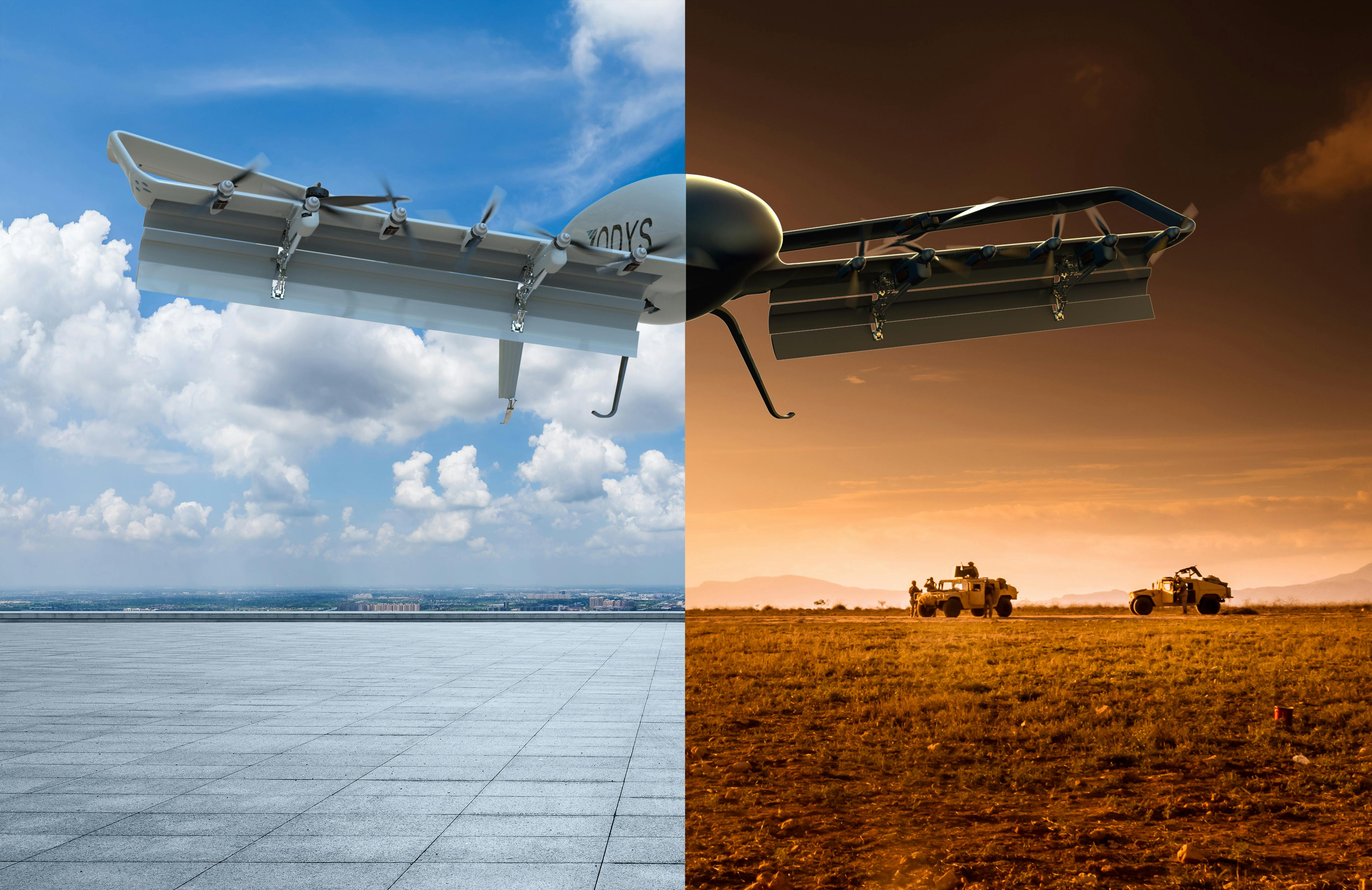
Laila wasn't retrofitted for defense missions as an afterthought. It was engineered from day one as a dual-use platform — built to the rigorous regulatory standards of commercial aviation, with performance that makes it a natural fit for airborne cUAS operations.
Our proprietary hybrid propulsion system is what makes it possible:
- 450-mile range
- 100 kW onboard high-speed generator
- Standard jet fuel
No specialized charging infrastructure, no logistical headaches. And it unlocks 8-hour endurance, rapid redeployment between missions, and enough onboard power to simultaneously run a full suite of detection and defeat systems:
- Detect/ID/Track: SIGINT, radar, EO/IR gimbals
- Defeat: Electronic warfare, cyberattack, airborne directed energy, and future kinetic interceptors
Why Honeywell Chose Laila
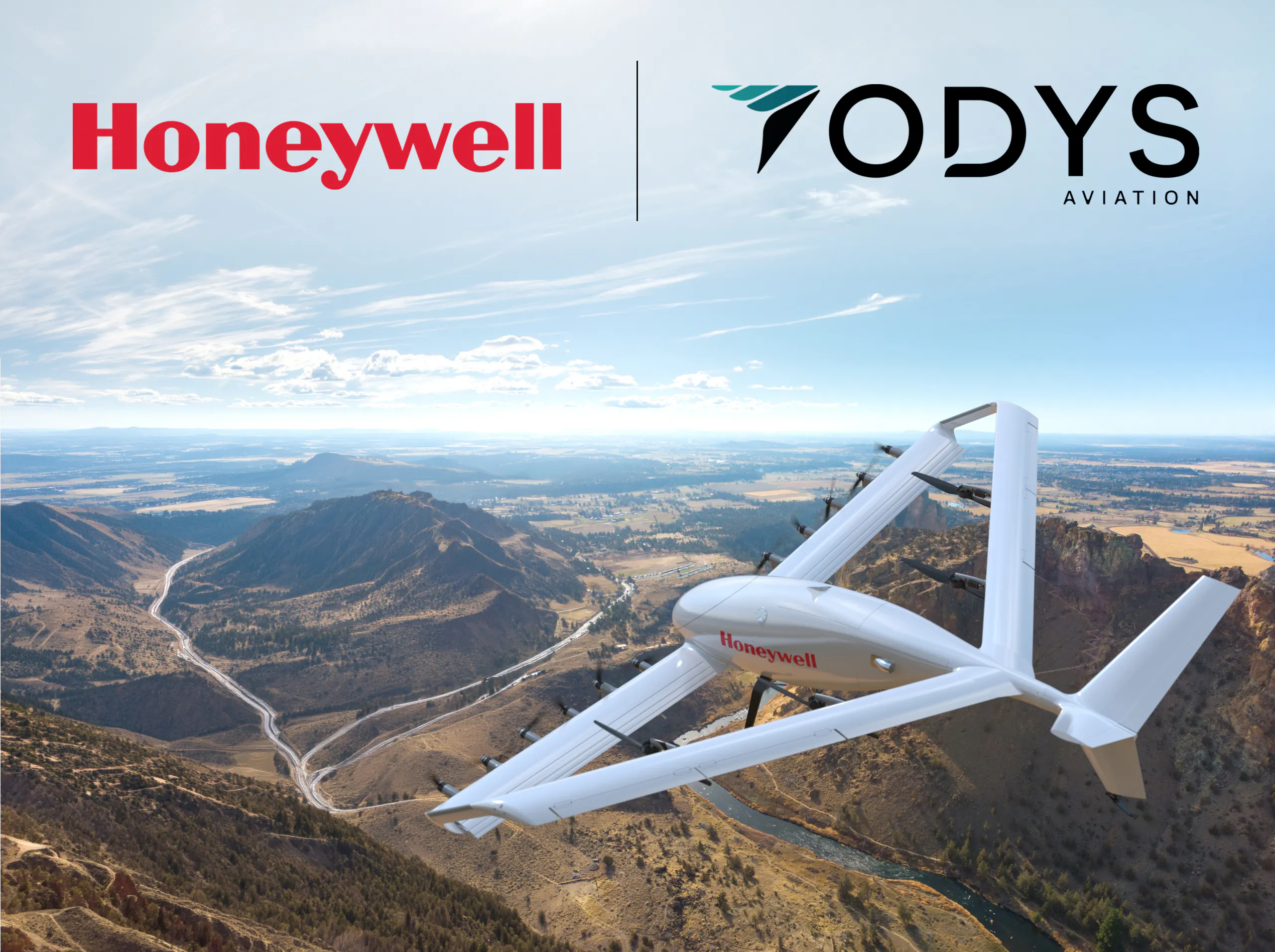
Laila's power and payload capabilities are precisely why Honeywell selected it as the preferred airborne platform for their SAMURAI A2 cUAS system — a turnkey, modular solution built on Model-Based Systems Engineering (MBSE) and compliant with Modular Open Systems Approach (MOSA) standards for long-term interoperability and sustainment.
"SAMURAI delivers critical counter-UAS capabilities with proven reliability, scalability and seamless integration into existing defense architectures. By leveraging Honeywell’s long history in avionics, sensors and defense systems, we are enabling C-UAS capabilities that protect farther, respond faster and operate with minimal downtime."
- Matt Milas, president, Defense and Space, Honeywell Aerospace.
Closing the Gaps in the Wall
Emerging low-cost cUAS options are a necessary and welcome part of the arsenal, but engagement perimeters of 3–15 miles and detection-to-impact times measured in seconds leave real, exploitable gaps. Limited reaction time means limited intercept success. These systems have their place, but a 3-mile perimeter isn't a wall — it's a last resort.
Laila pushes the engagement zone from the doorstep to the horizon, intercepting threats long before they're near their targets, and doing it without burning through stockpiles of high-value missile systems. Layered with ground cUAS options, it builds the kind of extended, multi-layered air defense system that this threat environment actually demands.
The asymmetry in modern drone warfare is real. Laila flips it.
Developed in California. Built for global missions. Vital to modern defense.