Aviation-Grade Hybrid. Limitless Applications.
Less than 50 years after the Wright Brothers first took to the air, jet propulsion rewrote the rules entirely. Faster travel. Greater range. More passengers. The ripple effects measured in trillions of dollars in global tourism, transformed defense capabilities, rapid deployment across oceans, and an air cargo market now projected to surpass $200B by 2030.
Not bad for a technology that's pushing 80 years old.
The next structural shift for aerospace is electrification, it will not only rewrite the economics of how the world moves, but enable a future where flying is as commonplace as driving. But assuming the path to electrification will be the same for aircraft as it has been for cars is not only wrong, it’s naive.
When advanced air mobility (AAM) first captured the world's imagination, batteries were the big focus. They'd already proven themselves in ground transportation, the public understood them, and the narrative was clean and compelling. The problem is that aviation is not automotive and has a brutal filter for clean narratives: physics.
Weight is everything in the air, no matter if you’re building a UAV cargo drone or an eVTOL air taxi, and batteries are heavy. Like really heavy, about 40X heavier than the energy equivalent in jet fuel. And unlike a car that can run on fumes and pop over to any nearby gas station, aircraft require reserve mission energy (for holding patterns, diversions, etc) that isn’t normally used but required to be carried around on every flight - astoundingly penalizing in battery weight. That's before accounting for the hours of downtime required to recharge between missions, a non-starter for any commercial operation where the clock stops paying the moment wheels touch down.
So we didn't follow the herd. We solved the actual problem.
Hybrid-Electric: The Benefits of Electric, Without the Part Where It Doesn't Work
Hybrid-electric propulsion keeps everything genuinely valuable about electric systems — redundancy, distributed propulsion, reduced maintenance, efficiency — and ditches what makes pure-electric unworkable in aviation, the giant battery. Safety reserves are carried in a small amount of additional fuel. Turnaround time drops from hours to minutes. And because it runs on standard jet fuel, it plugs directly into infrastructure that already exists at every airport or diesel station on earth. No billion-dollar charging buildout. No creative excuses about range.
The performance gap isn't marginal. Greater payload. Longer range. Extended endurance. Each one translates directly to revenue, meaning more cargo in UAVs, more passengers in air taxis, more destinations in regional travel. You know, the things the business model actually depends on.
Nothing on the Market Was Good Enough. So We Built Our Own.
When we went looking for a hybrid propulsion system capable of meeting aviation's demands, what we found was disappointing. The available options were largely off-the-shelf components bolted together by teams that lacked the ability, the conviction, or the foresight. Heavy. Inefficient. Riddled with unnecessary complexities and unacceptable failure modes. Saddled with maintenance costs that would make any operator's accountant physically ill.
So we engineered the only purpose-built hybrid propulsion system for aerospace.
Five years. A team with over 300,000 hours of electrification experience across 50 delivered electric and hybrid-electric powertrains. Iterative design cycles that drove power density from 12 kW/kg to 14.5 kW/kg to 16 kW/kg, while slashing development cycle time from 12 months down to 7. The result is a scalable, aviation-qualified hybrid system that delivers. Reliably.
The Part NASA Is Still Working On? We Finished It.
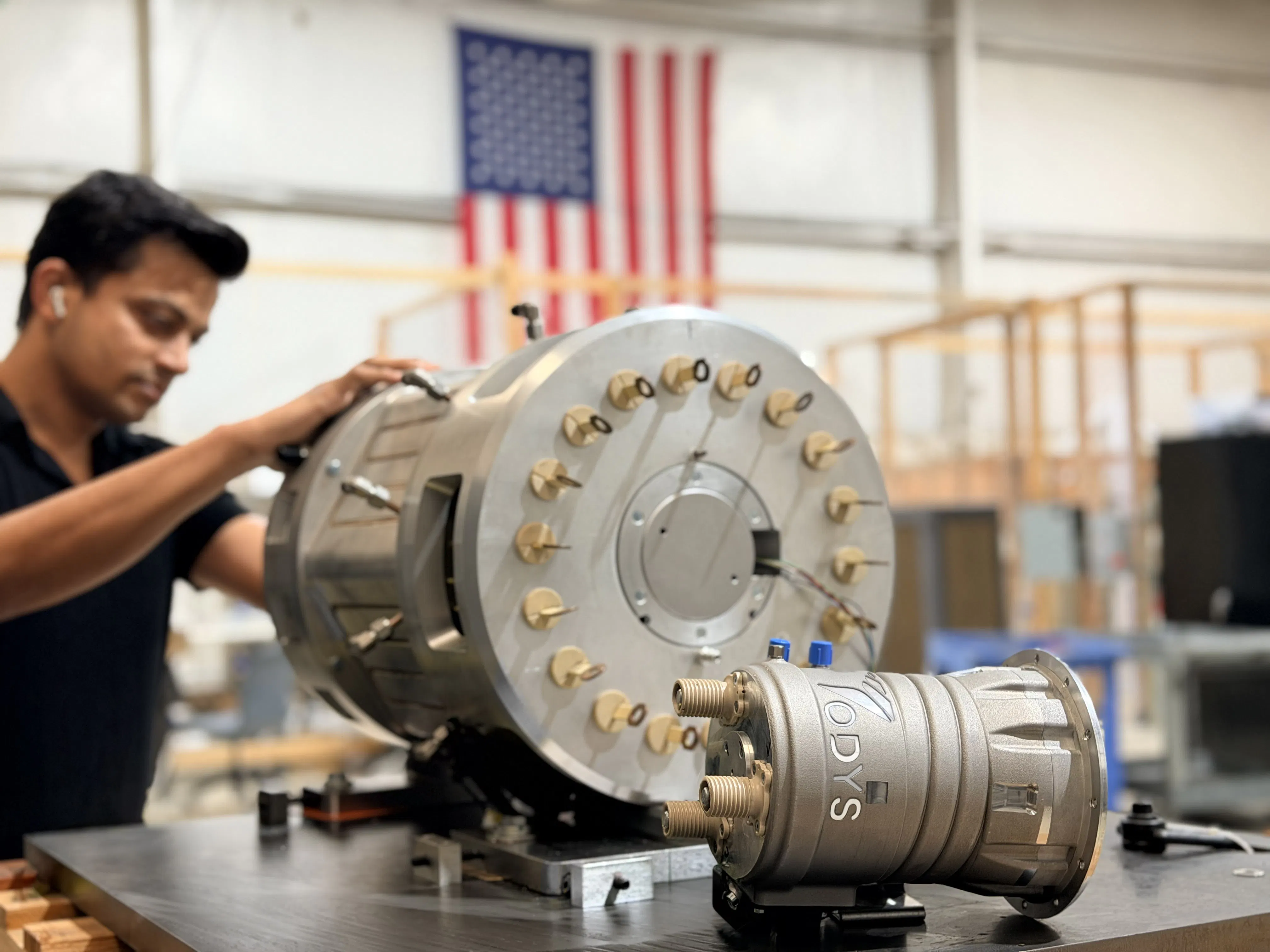
The high-speed generator (HSG) is the core of any compact, capable hybrid propulsion system, and it's where most prior efforts have quietly collapsed. The engineering demands are severe enough that NASA has dedicated eight years to developing their own 1 MW HSG. Full system validation hasn't happened yet.
Ours is validated.
From kickoff to testing, our first-generation 1 MW system was completed in under two years. New manufacturing methods, advanced liquid cooling for the rotor and stator, robust enough for the most demanding conditions.
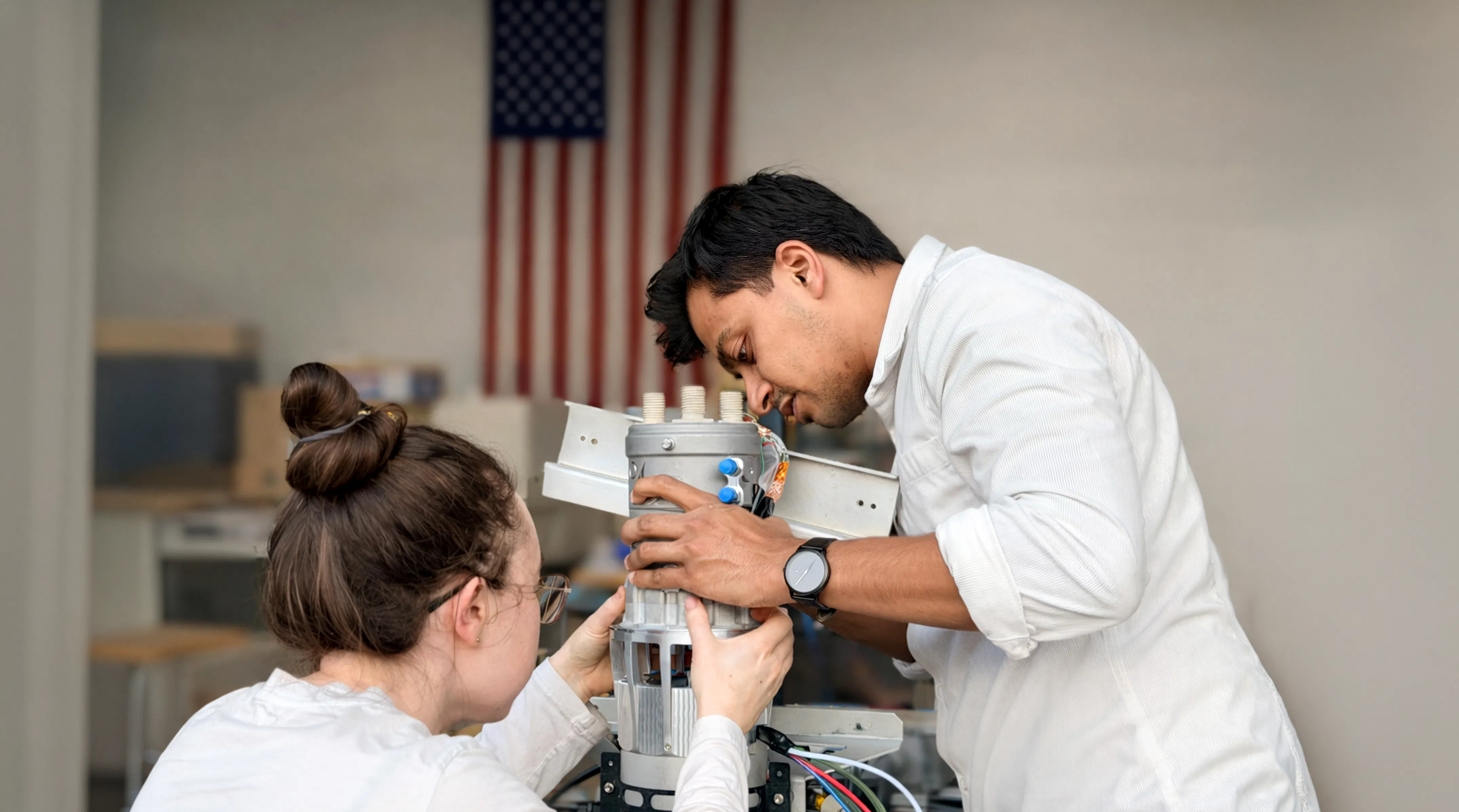
Then we applied that same no-compromise mindset to the rest of our hybrid system. No gearboxes, shared coolant loops, a single integrated control platform, and a fault-tolerant multi-lane electrical architecture. Lightweight by design. Built to the most demanding aviation standards. Then refined, scaled, and readied for production.
A Family of Systems, A World of Applications
Our hybrid propulsion portfolio spans the full range of modern aviation applications, as well as those yet to take-off:
- 60–100 kW: For Laila and Group 3/4 UAS platforms, running an 85K RPM direct-drive HSG
- 250–600 kW: For 4–6 passenger eVTOL aircraft, utilizing 50–70K RPM direct-drive HSGs
- 600 kW–1 MW+: For Alta and regional aircraft, running a 21K RPM direct-drive HSG
All of them run on JP-5, JP-8, Jet A, Jet A-1, or Diesel. Drop-in ready for commercial air travel and the demands of existing Defense missions. No new infrastructure. No excuses.
When the Mission Demands More Than Getting Airborne
Laila's hybrid system doesn't just power the aircraft, it generates enough excess energy to run a full suite of mission payloads and compute simultaneously. That's what makes it the platform of choice for counter-UAS operations: detect, ID, track, cyber defeat, directed energy and kinetic defeat systems, all powered without compromise. It can also fly to remote locations and operate as a self-deploying mobile generator. No need to truck in heavy legacy diesel generators. No need for risky air drops. Just ample power that transports itself.
And the applications extend well beyond flight:
- Ground vehicles — powering high-demand payloads while decoupling energy needs from engine size, enabling directed energy systems, and supporting silent-watch operations
- Remote power generation — significantly lighter than legacy tactical diesel generators, deployable to power distributed radar arrays, directed energy platforms, or other high-power field equipment
- Under-wing power — for power hungry electronic systems on existing underpowered aircraft platforms
- Small modular reactors (SMR) — a rapidly growing sector that needs exactly what we've spent years perfecting: a high-speed generator delivering reliable sustained output, with reliability, fault tolerance, and safety assurance baked in from day one
Tested. Validated. Ready for Production.
Twenty years into the jet age, aviation was unrecognizable from where it started. Twenty years from now, the same will be said about how we move today.
The next technological unlock isn’t hinging on a battery that exists only in pitches. It's already here, and it doesn't stop at aircraft. Ground, air, or ocean. Commercial, Defense, and everything in-between. All enabled by power. A mission list that’s virtually limitless.
And Odys has the propulsion systems built for all of it.